The short version
- The fear comes from a belief, not from a lack of skill. Change the belief and the tools start to hold.
- Tips treat symptoms. Before asking for help, 51% of people in BostonSpeaks research had tried over-preparing and memorizing, and 27% had tried breathing or meditation.
- Kit Pang teaches three steps: notice the nerves, name them, use them.
- BostonSpeaks coaching clients rate their anxiety 8.3 out of 10 at the start and 3.4 at graduation, on average.
You are not the only one, and you are not new to this.
BostonSpeaks, the public speaking anxiety coaching company Kit Pang founded, analyzed 2,500+ recorded calls, intake forms and messages from 600+ people who came for help between 2024 and 2026. Most are capable professionals who look calm on the outside. The fear of public speaking also has a name: glossophobia.
How people describe the fear
Source: BostonSpeaks analysis of 2,500+ recorded calls, intake forms and messages with 600+ people, 2024 to 2026. Most people mention more than one.
In their own words:
"People think I'm a great communicator. If they only knew."
"At this stage in my career, I shouldn't feel this way."
"If I know about a presentation weeks in advance, I'm in a horrible mind space for two weeks."
"I feel like I stalled my career because I was a silent contributor."
Quotes from the BostonSpeaks research, in people's own words.
Why tips alone do not hold
Most advice works on the surface: breathe, slow down, practice more, picture the room. Those can help in the moment. But if you still believe "everyone is judging me" or "if I go blank, it is over", the fear comes back the next time you stand up.
What people had already tried before asking for help
Source: BostonSpeaks, same analysis. As one person put it: "It helped the symptoms, not the root cause."
The reason is that speaking anxiety runs in a loop. Breathing exercises and practice treat the symptoms. The loop keeps running underneath.
The speaking anxiety loop, as BostonSpeaks describes it. It breaks at the source: the thought.
Kit puts it simply: mindset beats skill set. Work on the belief first, then build the tools on top of it.
Three steps Kit teaches
Notice the nerves
A racing heart, a shaky voice or a blank mind does not mean something is wrong with you. Kit's line is that nerves are a sign you care.
Name them
Admit the nerves to yourself instead of spending energy pretending they are not there.
Use them
Keep speaking in the rooms you already have. Skip the next meeting and the fear grows. You do not need a bigger stage. Even one meeting a week is enough to test a new belief.
Try it before your next meeting. It takes 3 minutes.
- Write down the thought. One sentence. What are you afraid they will think? That thought is where the loop starts.
- Name what your body does. Racing heart, shaky voice, blank mind. That is the reaction, not proof that you are bad at this.
- Pick one room this week. One meeting where you will say one thing, nerves and all. Do not skip it.
 WatchKit Pang on how to overcome speaking anxietyA conversation on Alex Lyon's Communication Coach channel on YouTube.
What Kit refuses to teach matters as much: no scripts, no power poses, no pretending you are not nervous.
That comes from where he started. Kit began as a hip-hop street performer, where he learned that a crowd leans in when you are real, not when you are perfect. In his words, the best speakers are human.
Does this approach work?
BostonSpeaks asks its coaching clients to rate their anxiety from 1 to 10 at the start of coaching and again at graduation.
How much each fear held people back, before and after coaching
Source: BostonSpeaks. Average self-ratings on a 1 to 10 scale, at the start of coaching and at graduation.
"My voice doesn't shake at all. And I actually join Zoom calls now at work."Martha, BostonSpeaks client
Which kind of help fits you?
| Option | What it focuses on | Best for |
|---|---|---|
| Anxiety coaching | The thoughts and beliefs behind your speaking fear, tested in your real situations | Professionals whose anxiety is holding back their career |
| Therapy | Broader mental health, past experiences, diagnosed anxiety disorders | Anxiety that affects many areas of life |
| Toastmasters | Regular practice in a supportive group | Building experience once fear is manageable |
| Speaking classes | Delivery skills: structure, voice, body language | Polishing skills, not removing fear |
Comparison from BostonSpeaks. Coaching is not a replacement for therapy or medical care. If your anxiety affects many parts of your life, a licensed professional is the right first step.
Your next step
For you
Work 1:1 online with a coach who specializes in speaking anxiety. 90-day guarantee.
For your event
Kit's keynote on speaking up, listening and leading like a human in the age of AI.
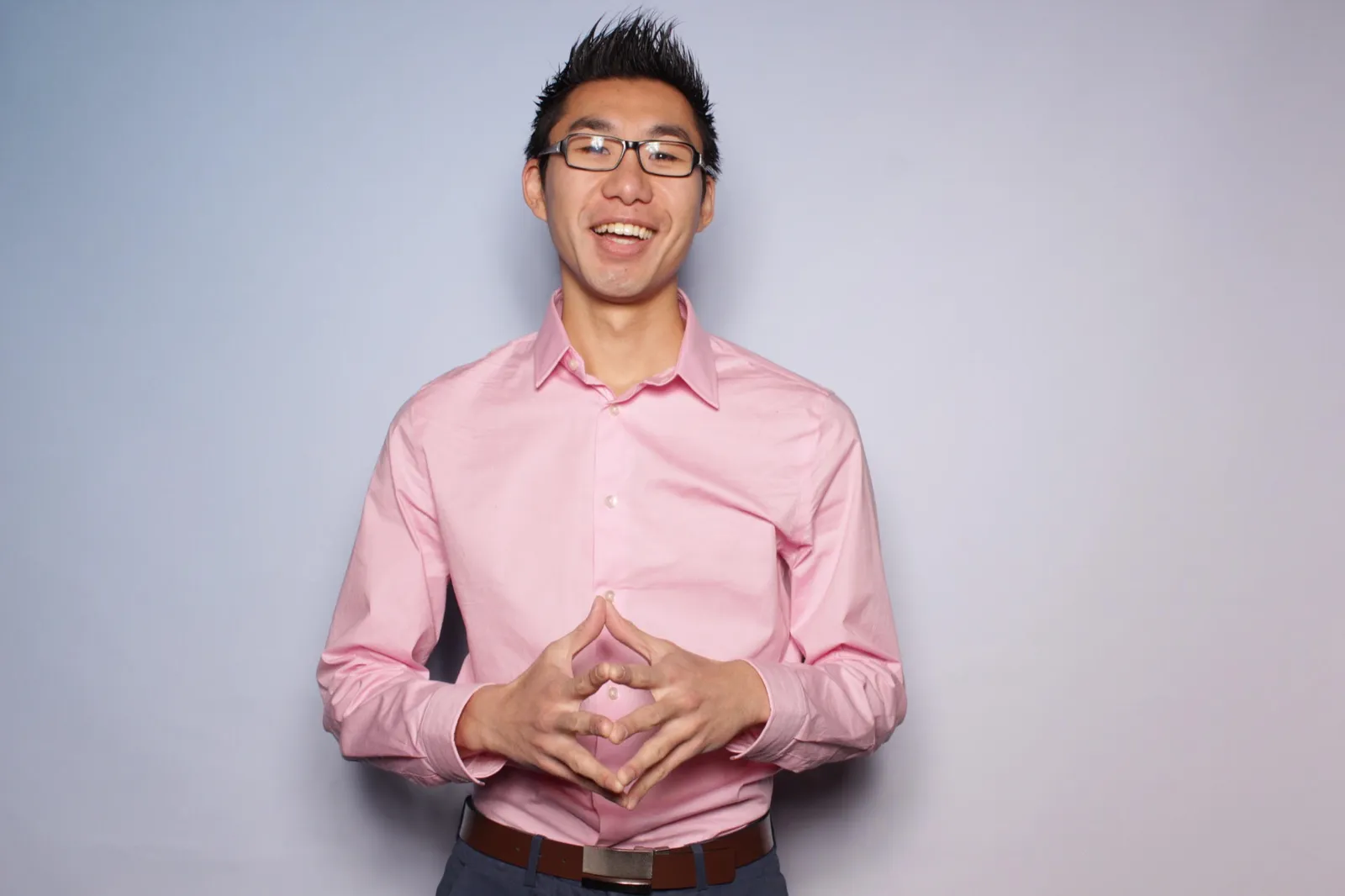
About Kit Pang
Kit Pang is a public speaking anxiety and communication expert, keynote speaker and coach. He is a former Harvard Business School public speaking coach, a TEDx speaker, and the founder of BostonSpeaks, which has trained more than 12,000 leaders.